Use streets as starting points
Mauritius’s tourism authority points to a panda work on Emmanuel Anquetil Street and manga imagery on Venpin Street. These are documented examples to help orient a walk, not a promise that every mural remains unchanged. Use the streets as references, then let what is actually there shape your attention. A street-art visit can reward curiosity without a fixed checklist.
Look at the wall and its setting
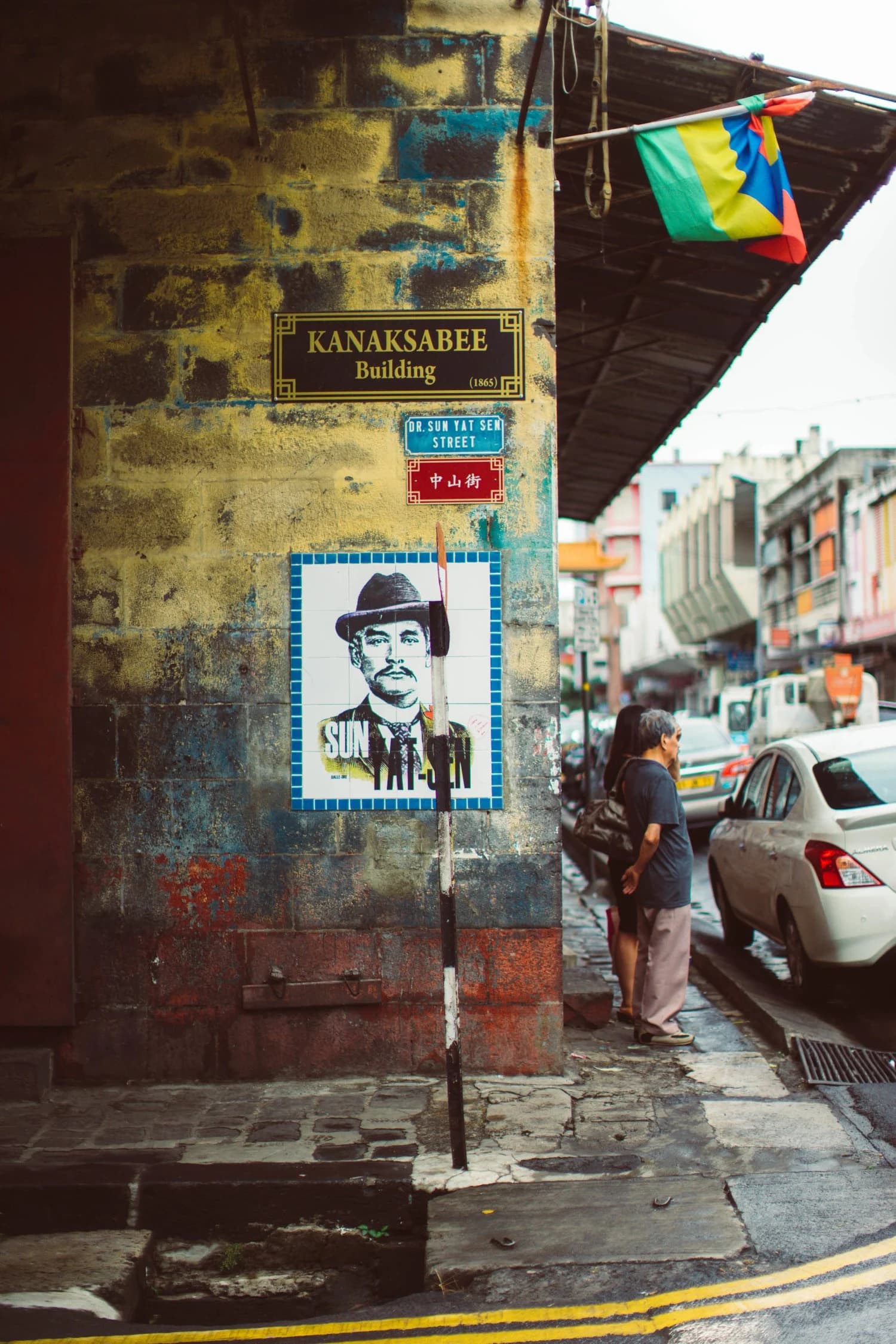
Notice how a painting uses its surface. Does it work around a doorway, occupy a narrow space or change the impression of a large wall? Step back only where there is room to do so. Looking at scale and position can be more revealing than collecting a close-up image with none of the surrounding street in it.
Remember that the quarter is lived in
Chinatown has shops and restaurants as well as murals. Keep entrances clear, move for deliveries and ask before photographing people. A shopkeeper beside a painting is not automatically part of a visitor attraction. If you want to stop for food or browse, give that activity its own time instead of using the business solely as a backdrop.
Let change be part of the experience
Outdoor art can be repainted, weathered or covered. If a work you expected is absent, the walk has not failed. Notice what has taken its place and avoid assigning an artist’s name without a reliable signature or source. This guide describes a way to explore, not an official marked trail or a current festival programme.
Before you go
Is there a fixed trail in this article?
No. Emmanuel Anquetil Street and Venpin Street are starting references from the tourism authority, not a verified turn-by-turn route.
Will the murals look exactly like online photos?
Not necessarily. Outdoor works can change. Treat older photographs as context rather than a guarantee of the current view.