
Begin with fiction, not a biography
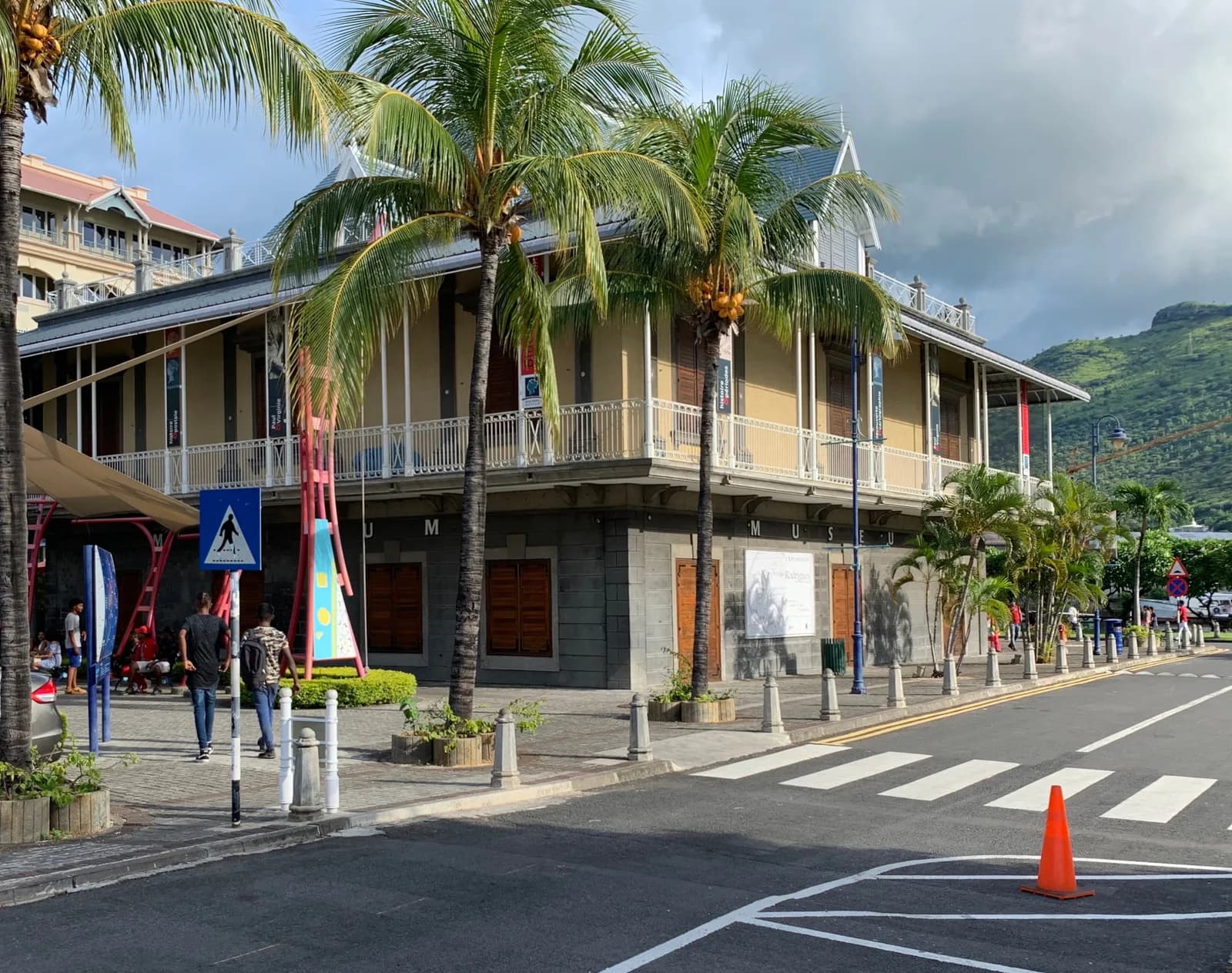
Paul and Virginie are characters in a novel by Jacques-Henri Bernardin de Saint-Pierre. The Blue Penny Museum devotes an exhibition room to their story. This makes it a literary stop, not evidence that the two characters lived in Port Louis. Keeping that distinction clear lets you enjoy the work without confusing imagined lives with the city’s documented history.
Look at how a story becomes an image
In the exhibition, notice how the relationship between the characters is presented. What draws your attention first, a gesture, a setting or an expression? You do not need to have read the novel to ask those questions. If you have read it, compare the interpretation with your own memory rather than expecting the display to illustrate every passage.
Compare literature with the historical city
Elsewhere, the museum shows old images and maps of Port Louis and presents colonial history. Moving between those subjects helps separate a literary imagination of Mauritius from records of a working city. A fictional story can reveal how an island has been imagined; a map answers different questions about streets and space. Neither should be asked to do the other’s job.
Give this room its own place in the visit
If literature is your main interest, mention it at reception and ask which related objects and interpretation are currently on display. Do not let the museum’s well-known stamps become your only reason for stopping. Afterward, choose one detail you want to read more about. The visit can be an introduction to the novel rather than a substitute for it.
Before you go
Is this a visit to Paul and Virginie’s home?
No. They are fictional characters. The museum has a room devoted to the novel and its place in Mauritian cultural imagery.
Must I read the book first?
No. You can approach the exhibition through its images and interpretation, then decide whether to read the novel afterward.